You already have more agents than you can see. Scaling them is an operating-model problem, not a capability one.
For CIOs, CTOs and COOs sponsoring or inheriting agent programmes — count what you already have, then govern it.
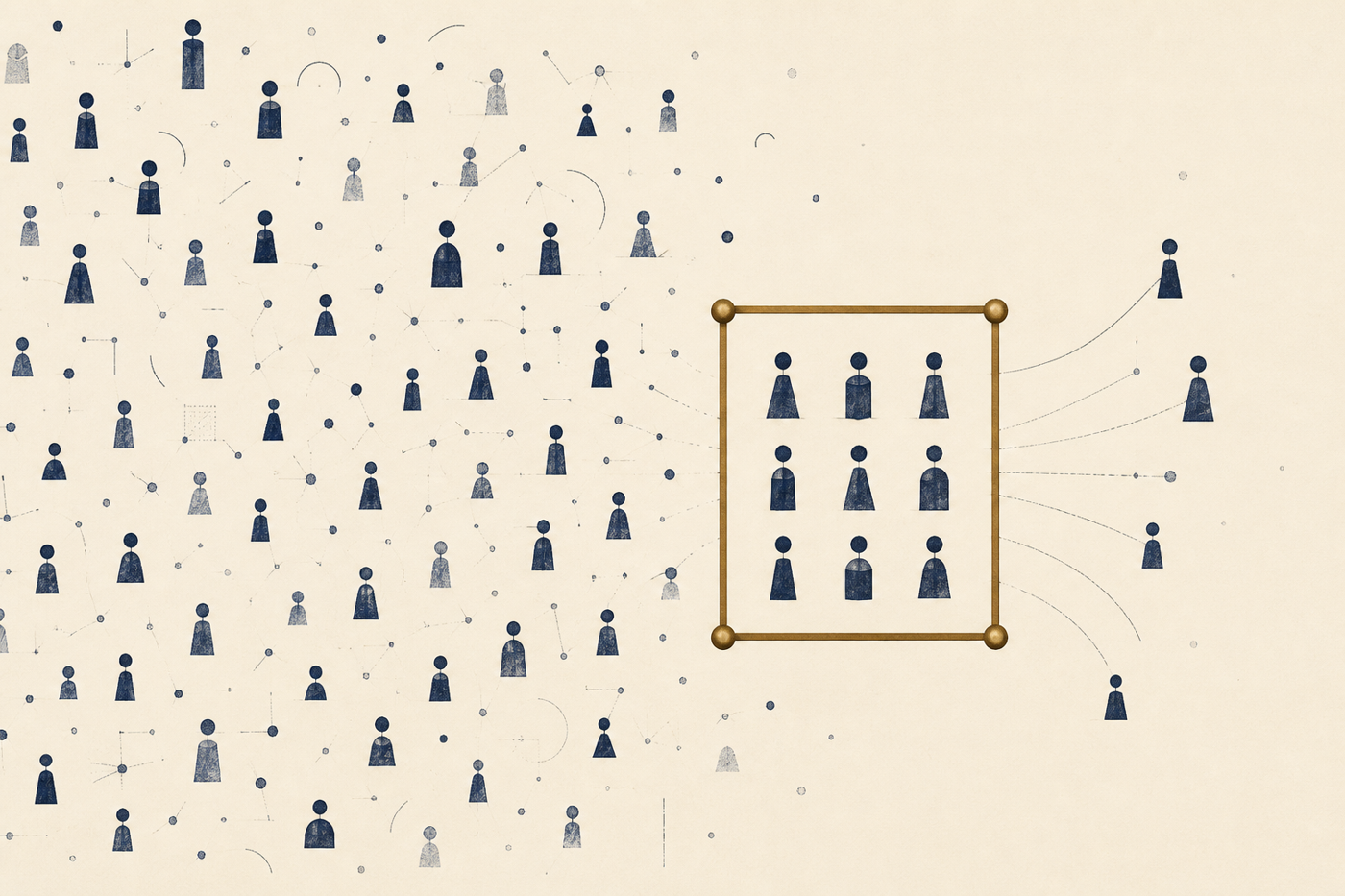
You already have more agents than you think
Ask a CIO how many AI agents the organisation runs and the honest answer is usually “I don’t know”. Not because no one is building them, but because everyone is. A marketing team wires one into its campaign tooling; an ops analyst scripts another to chase exceptions; a finance group stands up a third over the weekend. None of it is wrong, and none of it is visible from the centre. BCG’s 2026 read of this is blunt: business-led experimentation multiplies into thousands of ungoverned agents, and the risk concentrates precisely because they are ungoverned: unseen, unlogged, and accountable to no one.
This is a different problem from “can an agent do the job”. It is the problem of the estate: a growing population of small autonomous actors, each touching real systems, none of them on a register. The danger isn’t any single agent; it is that no one can say what the whole set is doing, or stop it if one goes wrong.
The window is short, and the tool is not the answer
BCG puts a clock on it: roughly 6–12 months for CIOs to build the foundations before adoption outpaces the ability to govern it. The instinct that follows is to buy a tool. But BCG adds the detail that defuses that instinct: agentic frameworks can become outdated in under a year. Whatever platform you standardise on today may be legacy before the sprawl is contained.
That rules out the one-off purchase and points at something more durable: not a framework, but a governance layer that sits above whichever frameworks come and go. The thing you need to own is not this year’s agent runtime; it is the register, the promotion rules, the receipts and the policy, the parts that stay true when the tooling underneath is swapped. Which is another way of saying the answer has to be model- and framework-agnostic by design, because everything it governs will change.
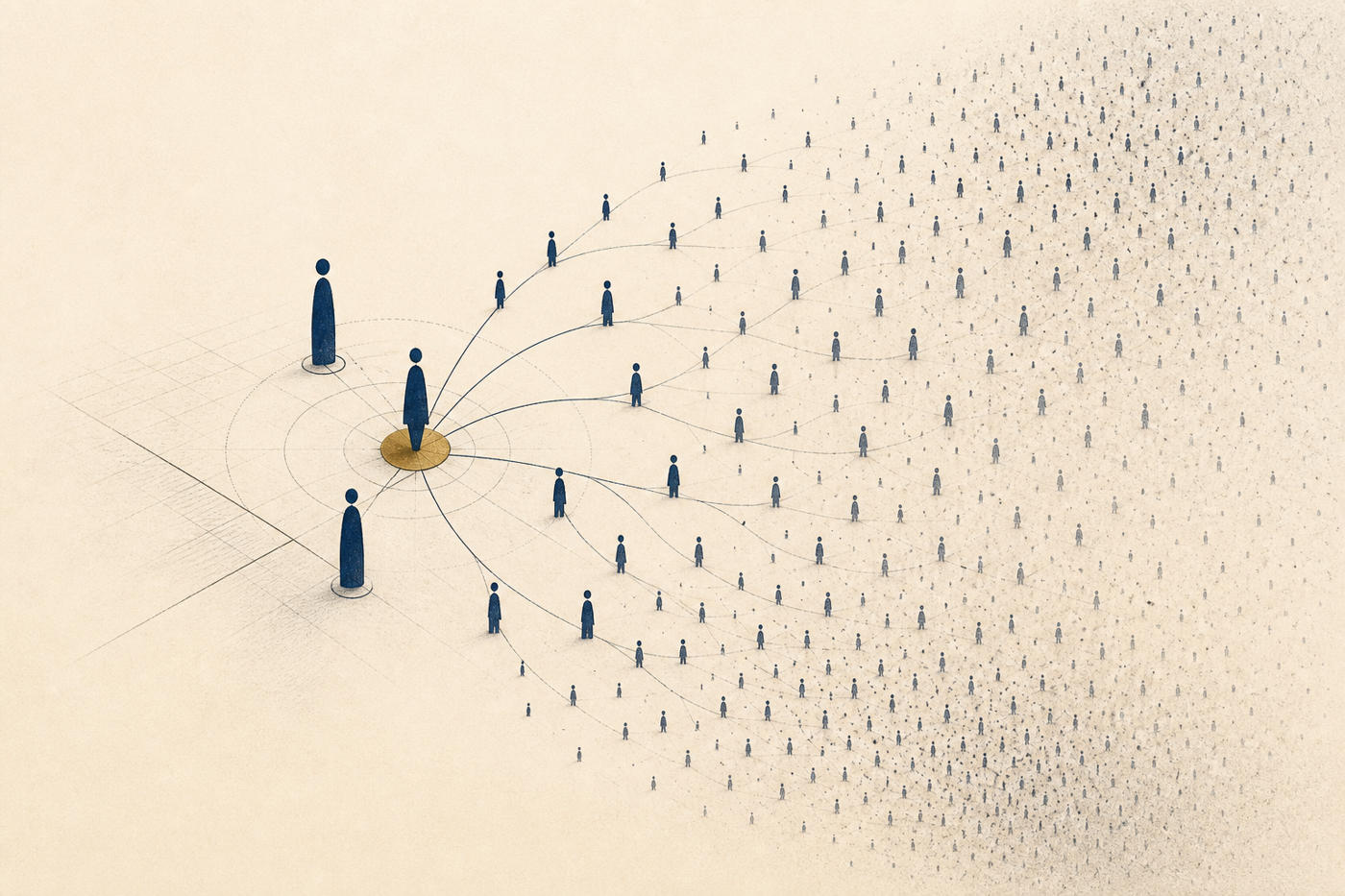
The real determinant is your operating model
Here one widely-cited 2026 reading lands on an unfashionable conclusion. Wavestone’s read, as reported alongside BCG’s, is that operating-model maturity, not AI capability, determines how far a firm can scale agents. The organisations that scale are not the ones with the cleverest models; they are the ones whose operating model can absorb autonomous actors: define them, promote them deliberately, watch them, and hold someone accountable for each.
That reframes the whole programme. “How do we scale agents” stops being a question about models and becomes a question about the operating model: do we have a register, a graduation pathway, receipts and policy, and the org design to run them. A smarter model dropped into an immature operating model just produces sprawl faster.
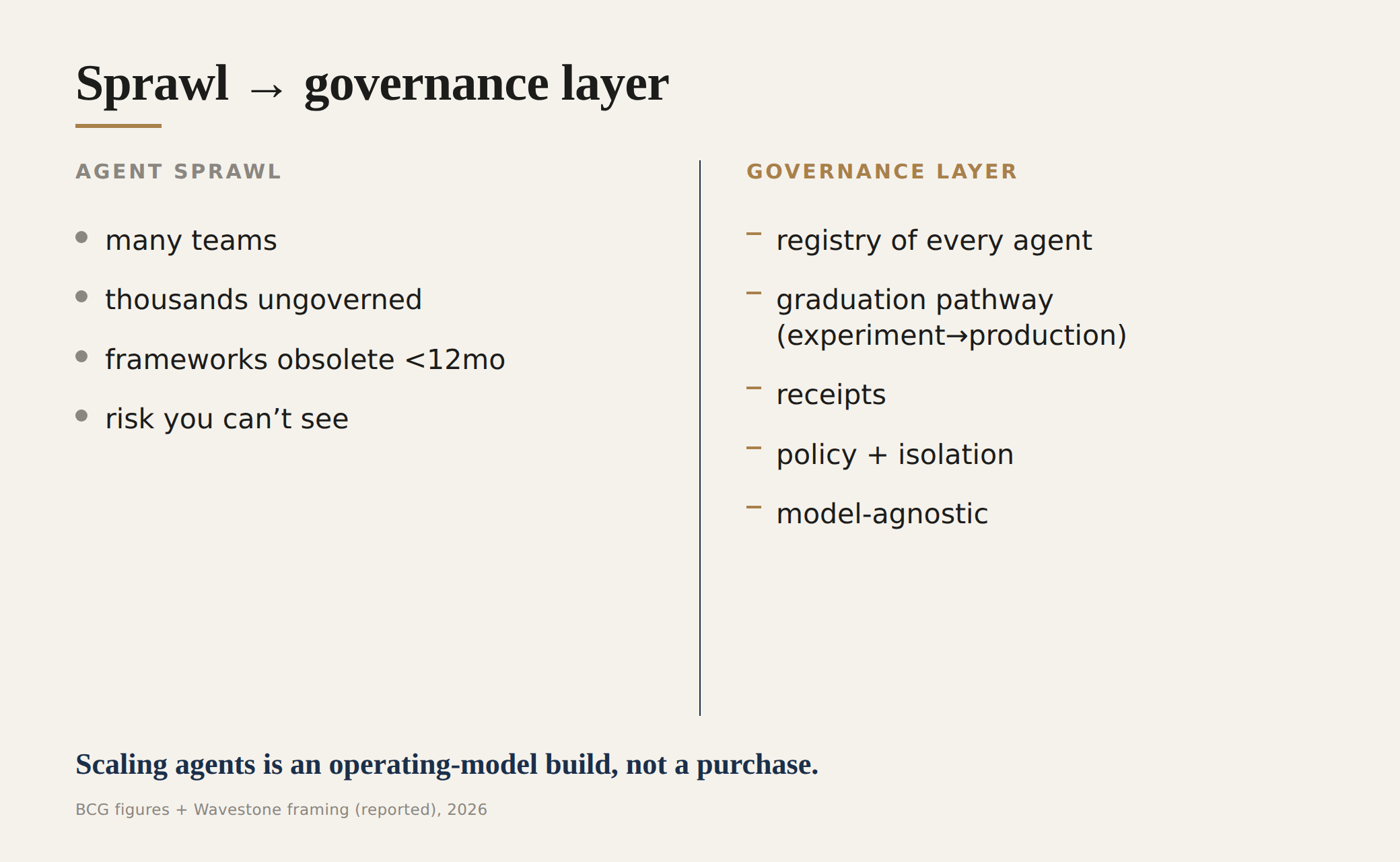
What a governance layer actually is
If scaling is an operating-model build, the build has a concrete shape. As designed, Operstead provides that shape as a horizontal, model-agnostic layer: a registry of every agent, so the estate is visible; a graduation pathway that moves an agent from experiment to production only through defined gates rather than by whoever deployed it; receipts of what each agent actually did, so the set is accountable; and policy and isolation designed to limit blast radius when one misbehaves. Because it governs frameworks rather than being one, it is built to survive their churn.
All of the above is what Operstead is designed to do. The BCG and Wavestone figures describe the market; they are the shape of the problem, not an Operstead result.
What changes for the executive
The first move is unglamorous and clarifying: count. How many agents does the business already run, and how many can the centre actually see. The gap between those two numbers is your sprawl, and it is usually larger than anyone expects. The second move is to treat scaling as an operating-model build with a deadline (a register, a graduation pathway, receipts and policy) rather than a tool to be selected. And the third is to change the metric: not “how many agents” but “how much of the estate is governed”, because in an ungoverned estate more agents is more risk, not more value.
The intended effect is an estate you can see and answer for. The direction is clear and the clock, per BCG, is running.

Where this leaves you
Enterprises are quietly accumulating agents, and the ones that will scale are not the ones that found a better model but the ones whose operating model could hold the estate: visible, promoted deliberately, logged, and owned. The tooling under it will change within the year; the register, the pathway, the receipts and the policy will not. If sprawl is the gap you recognise, the honest next step is a conversation, and we are glad to walk through the local registry, graduation and receipts evidence behind what is claimed here.